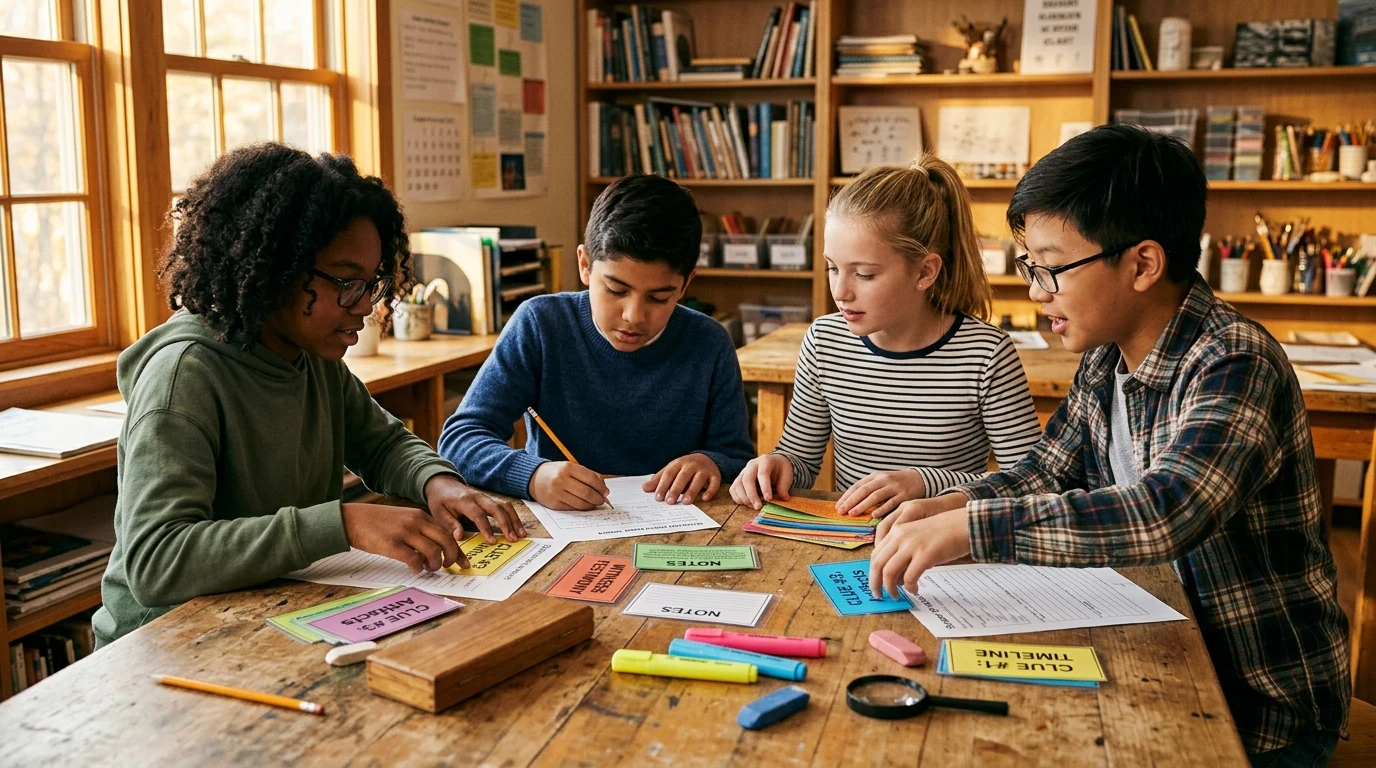
Every middle school teacher knows the standard breakdown of unstructured group work. In a pod of four students, one conscientious student takes control of the master worksheet, two students look on with polite detachment, and the fourth student stares out the hallway window.
Cooperative learning is easy to write into a lesson plan, but left unmanaged, it frequently turns into an accidental tax on your most diligent students. The high achiever assumes the burden because they care about the grade, while striving or disengaged students learn that staying quiet is the most efficient path through the period.
Assigning standard classroom jobs like “Timekeeper,” “Materials Manager,” or “Cheerleader” rarely resolves the imbalance. A student designated as timekeeper watches the wall clock for forty minutes without interacting with the academic concepts. Meaningful engagement requires instructional interdependence: activity structures where no group can advance until every member contributes unique, necessary information.
The Principle of Distributed Information
The single most effective way to eliminate passive participation is removing the shared master packet. When a group receives a single document to analyze, centralizing the work in one pair of hands is natural human behavior.
Instead of handing out one comprehensive packet, distribute the evidence across individual clue slips or source sheets:
- Individual Ownership: Give each student in the group an exclusive source excerpt. Student A holds the financial ledger, Student B holds the merchant’s testimony, Student C holds the colonial newspaper notice, and Student D holds the timeline of events.
- The Two-Minute Silent Briefing: Before groups talk to one another, establish a mandatory two-minute silent reading window. Every student must read their individual source sheet and write down two verified facts on their own tracking slip.
- Verbal Sharing, Not Paper Trading: Establish a strict ground rule that students may not physically hand their source sheets to teammates. To contribute, they must verbally summarize their evidence to the table.
This simple procedural constraint completely shifts the social interaction in the room. The student who typically remains silent suddenly holds a critical piece of the puzzle that nobody else at the table possesses.
Personal Evidence Sign-Offs
Even when information is distributed, some students still attempt to drift during the synthesis phase. An effective countermeasure is the individual evidence sign-off.
Rather than accepting a single group poster or shared answer sheet, require each student to complete an individual investigation sheet in their own handwriting. To record evidence discovered by a teammate, they must record that teammate’s initials next to the finding:
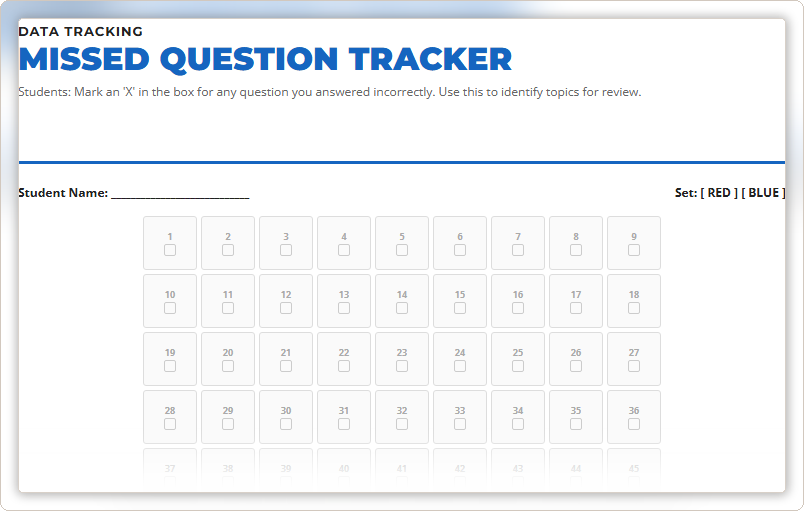
When you circulate the room, a quick glance at their papers tells you the entire story of the group. If one student has three empty rows on their tracking matrix, you do not need to deliver a lecture on teamwork. You simply ask: “Whose source card has the information for row two? Let’s hear what that document shows.”
Managing Volume Without Killing Momentum
Interactive challenges often generate genuine excitement, which can quickly spill over into excessive volume. Once three groups begin shouting over each other, learning degrades rapidly.
Instead of issuing repeated verbal warnings from the front of the room, use a silent deduction system:
- Give each team three investigation tokens at the start of the challenge.
- If a group’s volume exceeds a conversational level, place a yellow warning card on their desk without interrupting their conversation.
- If the volume remains elevated, quietly remove one token.
- Each lost token delays their final clue access by sixty seconds during the final deduction stage.
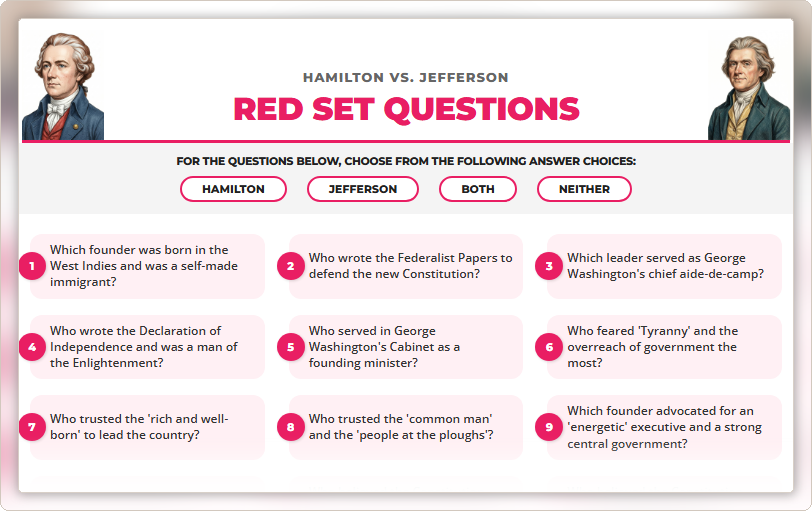
Middle school students respond remarkably well to clear, game-like boundaries. Because the consequence is structural and predictable, teams naturally self-regulate their volume to protect their strategic standing. We see this exact engagement pattern unfold during competitive review sessions, such as our Ultimate Tic-Tac-Toe: Hamilton vs. Jefferson Review Game, where strategic board positioning requires quiet, focused teammate coordination.
The Instructional Takeaway
Middle schoolers do not check out of group activities because they dislike collaboration. They check out when the instructional design makes their presence optional.
When activities are structured so that every student holds unique evidence and individual verification is required, participation ceases to be a disciplinary battle. It becomes the natural, unavoidable rhythm of the classroom.
Ultimate Tic-Tac-Toe: Hamilton vs. Jefferson Review Game
Elevate test prep into a high-stakes, collaborative strategy tournament for grades 6–9. Pairs content questions on Federalists versus Democratic-Republicans with layered board tactics, missed-question tracking, and zero teacher prep.
View on Teachers Pay Teachers